
Address
78 Shenton Way #17-03, Singapore 079120
Contact
Legal
Copyright © Merquri Pte Ltd. All rights reserved.
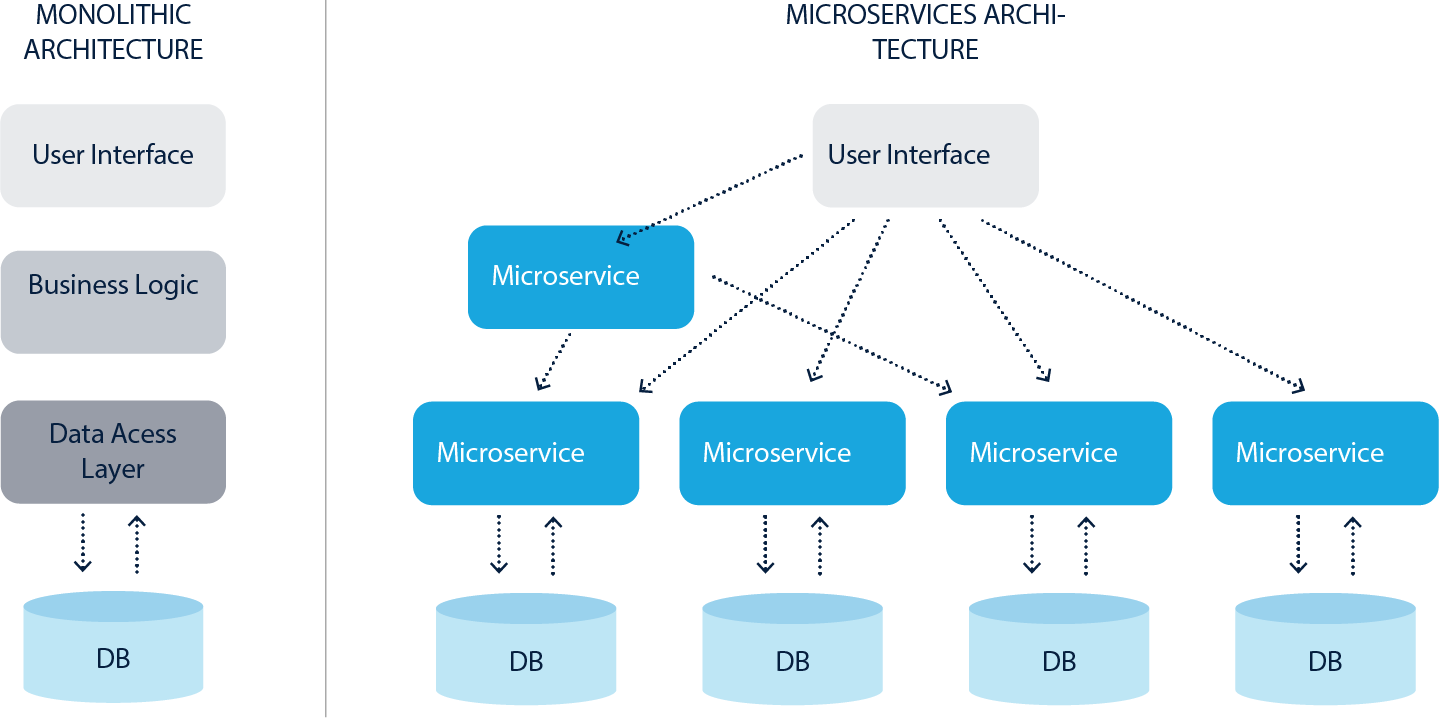

Spring Boot is used to build standalone and production-ready spring applications. This section provides a quick introduction to Spring Boot and familiarises you with fundamental concepts. Spring Boot provides a stable platform for Java developers to develop a stand-alone and production-grade spring application that users can simply execute. There is no need for an entire Spring configuration setup; one can get started with minimum configurations.
a. Benefits of Spring Boot
Spring Boot offers the following advantages to its developers –
b. How does it work?
Spring Boot configures your application based on the dependencies you have added to the project automatically by utilising @EnableAutoConfiguration annotation.
By way of an illustration,if MySQL database is on your classpath, but you have not configured any database connection, then Spring Boot auto-configures an in-memory database.
The entry point of the spring boot application is the class containing @SpringBootApplication annotation and the main method. The scanning all the components included in the project is automatically done by Spring Boot through @ComponentScan annotation.
This is frequently achieved through teams within the organisation collaborating, with a special focus on improving throughput by removing roadblocks.
DevOps originated from the lean thinking and agile development movement. The goal is to quickly and sustainably ship high-quality, relevant software. Typically, agile development focuses on the role of software engineers and rapid, incremental software development.
Adhering closely to the agile philosophy, there is increasing emphasis on continual, incremental, and rapid delivery of software functionality. Thus, the term “agile” has been expanded to include speed and quality in operation, which is defined by a set of activities that transform software from code complete to supported in production (e.g., build, test, provisioning, configuration, deployment, and ongoing management). Rapidly shipping
software in this manner requires the collaborative efforts of developers (Dev) and IT operations (Ops), not to mention project managers, finance, and business stakeholders.
The fluid nature of DevOps avoids much of the traditional handoff friction and delays between product development and IT operations. This is achieved through greater collaboration, communication, and joint responsibility for the success of software delivery.
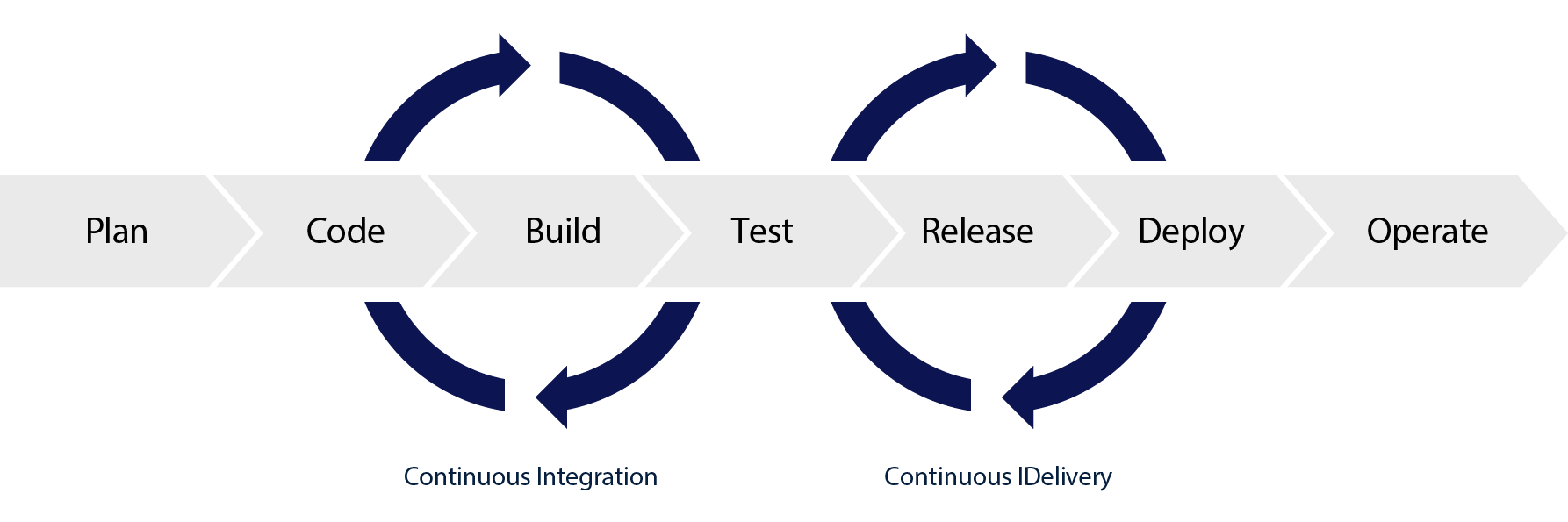
Continuous Integration refers to the automated testing and building of software after integrating new bits of application code into a shared repository. The end result is that there are “builds” of the application that are perpetually in a working state. As part the of continuous integration process, unit tests are included, which in turn validates the functionality of the software. One benefit of doing this is that bugs are identified upfront.
It also prevents wasted cycles further down the feedback loop.
Continuous Delivery refers to the process of delivering applications created in the CI process to a simulated production environment, where additional automated tests are implemented to ensure the application functions as expected when pushed to actual production environments and put in the hands of real users.
This additional check also ensures the latest build interacts with other software and applications as intended. Successful CD means builds are always ready to be deployed to production, which can be done via automation (a related process called Continuous Deployment) or a manual process like cf push.