
Home
Why Merquri
About UsTechnologies
Careers
Services
App DevelopmentIntelligent AutomationData and AnalyticsCloud Services
Insights
KubernetesCloud TransformationMicroservicesVisualisation & AnalyticsReact JS and React NativeQuality Assurance and Testing
Contact
Address
78 Shenton Way #17-03, Singapore 079120
Contact
enquiry@merquri.io
Legal
Privacy Policy
Copyright © Merquri Pte Ltd. All rights reserved.
Insights
Kubernetes
Whether you are looking to automate deployment, scale operations, or simply find a way for teams to work seamlessly, forward-looking companies look to Kubernetes to steer ahead.
IWHAT IS CONTAINER?
Containers offer a standard way to logically package an application’s code, configurations and dependencies, in effect abstracting them from the environment in which they are run.

Container-based applications that are decoupled this way can be deployed easily and consistently across different environments, ranging from private data centers to the public cloud.

Containerisation allows teams to focus on concerns related to their areas of expertise. Developers, for example, can focus on application logic and dependencies while IT operations teams can focus on deployment and management,

without being concerned with app-specific configurations details and software versions.

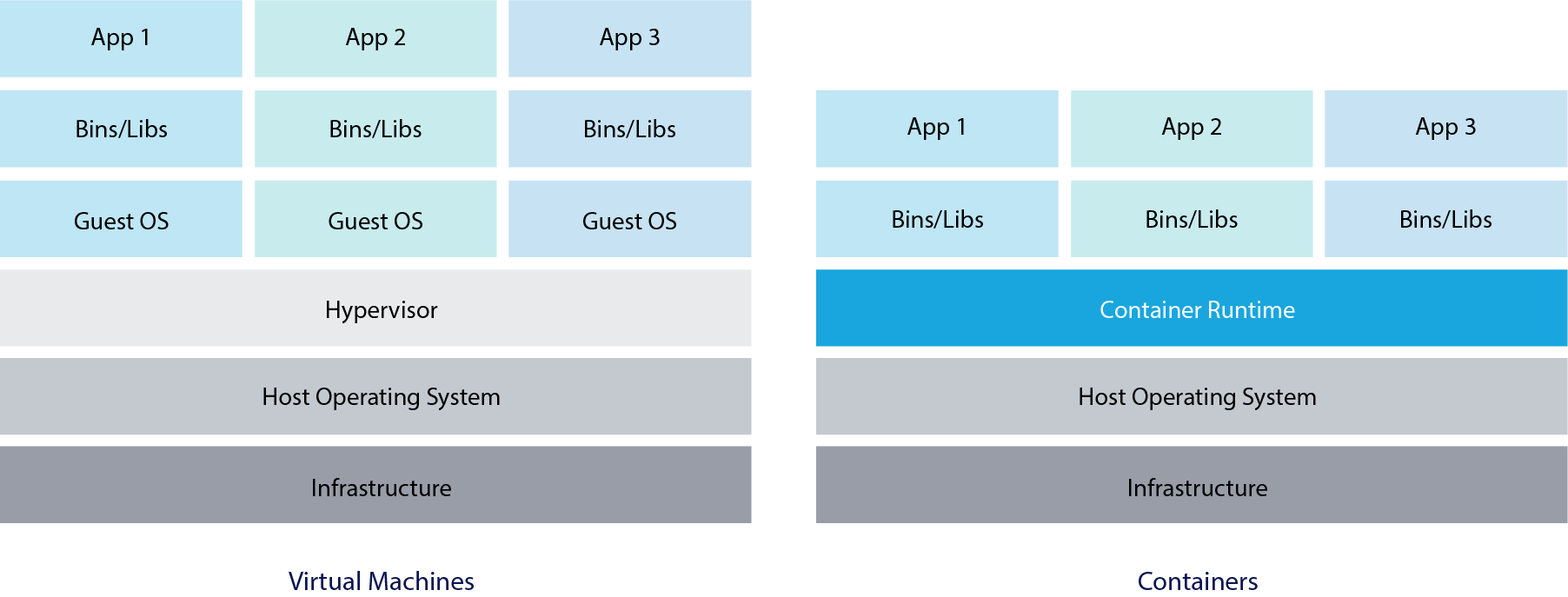
Professiionals who work in virtualised environments find containers analogous to virtual machines (VMs). Some might be familiar with VMs if they have run a guest operating system such as Linux or Windows on top of a host operating system with virtualised access to the underlying hardware.

Similar to VMs, containers offers a mechanism to package an application together with libraries and other dependencies, providing isolated environments for running software services. However, containers are distinguished from VMs in that they offer a far more lightweight unit for developers and IT Ops teams to work with while also providing a host of benefits.

What is container
IIA PRIMER ON CLOUD NATIVE APPLICATIONS
Cloud native is a term describing container-based environments.

It is used to develop applications that leverages on the benefits of cloud computing delivery model. Rather than the question of “where”, cloud native focuses on how applicatios are created and deployed. Practically every industry thinks about public clouds when considering investing in infrastructure, a cloud-like delivery model works for both private and public clouds.

Over and beyond that, it offers on-demand and nearly infinite computing power, coupled with modern data and application services, for developers. Organisations that incorporate the cloud native approach to build and operate applications are able to quickly commercialise new ideas and respond to a rapidly changing consumer landscape.

Cloud Native
Benefits
Gain a Competitive Edge

Organisations adopting the cloud native approach shifts their goal from cost reduction of IT infrastructure to accelerating business growth. Development teams gain an advantage over their competitors if they are able to develop and deliver applications consistently and expediently.

Construct Robust Infrastructure

Developers operating in a cloud native environment focus specifically on building and designing robust systems that remain online even when there are issues elsewhere in the environment. Unlike legacy infrastructres where failures can potentially cause massive disruptions to services, a cloud native approach allows teams to work on creating a resilient system that can weather any storm.

Cater to Different Cloud Environments

Enterprises today don’t want to be limited to public clouds, even if providers can offer relatively remarkable services at reasonable price points. The ability to build applications that run on both private and public clouds is a huge plus as teams can continue to deploy apps and services where it makes business sense.

Transform into a Robust, Business- focused Entity

The automation of IT operations facilitates the transformation of businesses into a lean team with a view to driving growth. This is achieved through the elimination of risks resulting from human error. Team members can instead automate routine tasks, live patching and upgrades and align themselves with overall business goals.

IIA PRIMER ON CLOUD NATIVE APPLICATIONS
Kubernetes is an open-source platform that is used to manage containerised applications and services.

It is portable, extensible, and facilitates declarative configuration as well as automation. The Kubernetes eco system has grown rapidly and today, a range of Kubernetes services, support, and tools are widely available.

Kubernetes is derived from a Greek term which translates to helmsman or pilot. Open-sourced by Google in 2014, Kubernetes builds on Google’s 15 years of experience running production workloads at scale and incorporates best-of-breed ideas and practices from the community.

Kubernetes
Why do we need them?
Why kubernetes
Service discovery and load balancing

Kubernetes, using the DNS name or the container’s own IP address, can expose them. If there is high traffic to a container, Kubernetes can load balance and distribute the network traffic to stabilise deployment.

Why kubernetes
Storage orchestration

Kubernetes users can automatically mount a storage system of their choice, such as local storages, public cloud providers, and more.

Why kubernetes
Automated rollouts and rollbacks

Kubernetes allows users to describe the desired state for their deployed containers using Kubernetes. The system can facilitate the transition from the actual state to the desired state at a controlled rate. For instance, it is possible to automate Kubernetes to create new containers for deployment, remove existing containers and adopt all their resources to the new container.

Why kubernetes
Automatic bin packing

Users can provide Kubernetes with a cluster of nodes that it can use to run containerised tasks. Define the amount of CPU and memory (RAM) each container needs and Kubernetes can fit containers onto your nodes to make the best use of your resources.

Why kubernetes
Self-healing

Kubernetes reboots failed containers, replaces containers, and kills containers that are unresponsive to user-defined health check. These containers are not advertised to clients until they are ready to serve.

Why kubernetes
Secret and configuration management

Kubernetes allows for the storage and management of sensitive information, such as passwords, OAuth tokens, and SSH keys. Deploy and update secrets and application configuration without the need to rebuild container images, and without the risk of exposing secrets in your stack configuration.